The SWAN Resource Library is located at the SWAN Office, and contains more than 350 items. Books and DVDs are available for loan free of charge to all SWAN Members, and we have numerous FREE information pamphlets available to keep. Please contact us to enquire as to the availability of items and to borrow from our library. Resources will need to be collected from, and returned to our Busselton office, located at 12 Pettit Crescent, Busselton WA 6280.
Would you like to contribute to our Resource Library?
If you have a resource you would like to share with others, please contact us to make arrangements. Alternatively, make a Donation to SWAN. All donations over $2.00 are tax deductible.
The South West Autism Network relies on the generosity of our members and community to support the families of the south west region living with ASD.
Panic Disorder is common and very troublesome. About three people in a hundred have it and many more people have occasional panic attacks. About a third of those who have Panic Disorder go on to develop Agoraphobia which, if left untreated, can ruin their lives. Having a full blown panic attack is a horrifying business and feels deadly, although it’s not.
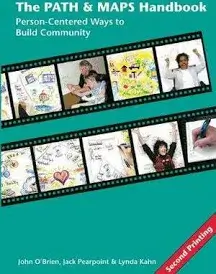
The PATH & MAPS Handbook
O'Brien, Pearpoint & Kahn
Person-Centered Ways to Build Community
The PEERS Curriculum for School-Based Professionals
Elizabeth A. Laugeson
The PEERS Curriculum for School-Based Professionals brings UCLA's highly acclaimed and widely popular PEERS program into the school setting.
This sixteen-week program, clinically proven to significantly improve social skills and social interactions among teens with autism spectrum disorder, is now customized for the needs of psychologists, counselors, speech pathologists, administrators, and teachers. The manual is broken down into clearly divided lesson plans, each of which have concrete rules and steps, corresponding homework assignments, plans for review, and unique, fun activities to ensure that teens are comfortable incorporating what they’ve learned. The curriculum also includes parent handouts, tips for preparing for each lesson, strategies for overcoming potential pitfalls, and the research underlying this transformative program.
The People in a Girl’s Life
Martha Kate Downey & Kate Noelle Downey
Written for girls and young women who have difficulty understanding people around them.
This book will help them to comprehend family, friends, employers and many others they face every day. Presented as a series of letters between daughter, Kate Downey and mother, Martha Kate Downey. This book provides an insight into the problems that many adolescent girls with intellectual disabilities face.
The Period Book
Karen Gravelle & Jennifer Gravelle
Karen Gravelle and her fifteen-year-old niece, Jennifer Gravelle, have written a down-to-earth practical book that answers any questions you might have about your period...
from what it is and what it feels like, to how to choose your form of protection, to how to talk to your parents about it. The Period Book will guide you through all the physical, emotional and social changes that come with your period, as well as related issues such as dealing with spots, mood swings and new expectations from friends and family. Debbie Palen’s funny and sympathetic cartoons ease the confusion and exasperation you might feel and celebrate the new sense of power and maturity that your period can bring. Perfect for sharing, The Period Book is a trusty friend that can help you feel happy and confident about this new phase or your life.
The Red Beast
K.I. Al-Ghani
Deep inside everyone, a red beast lies sleeping. When it is asleep, the red beast is quite small, but when it wakes up, it begins to grow and grow.
This is the story of how one boy, Rufus, conquered his anger and sent the red beast back to sleep. Developed in conjunction with the National Autistic Society (NAS in the UK), this book offers a range of anger management strategies and useful guidance for parents on how to help their child ‘tame the beast’
The Resolving Bullying Book
Fiona McAuslan and Peter Nicholson
In recent years, bullying has come to the forefront of schools as a serious problem. Policies have been written and strategies created.
This book looks at bullying as a relational issue and puts forward ideas and strategies for the individuals themselves to use. It is aimed at children, their parents/guardians, teachers and professionals who work with the age group of six to twelve years.
The School Wobblies
Chris Wever
Some children find it very hard to go to school.
If they refuse to go it can wreck their education and cause parents and schools a lot of worry and frustration. The School Wobblies is a book about the worries and scary thoughts lurking in the minds of children who are phobic about going to school. It shows how to deal with such troubling thoughts and encourages ways of thinking and coping to allow a return to school.
The Science of Making Friends
Elizabeth A. Laugeson
This book offers a groundbreaking approach for helping socially challenged teens and young adults make and keep friends.
Based on UCLA’s acclaimed PEERS program – the only evidence-based approach of its kind in the world – this accessible book and DVD offer tools parents and educators need to become “social coaches” to the teens and young adults in their lives.
The Secret Business of Relationships, Love and Sex
Heather Anderson, Fay Angelo, Rose Stewart
This book is for all young people approaching or already in their teens. It is an educational resource that prepares them for the physical, emotional and social aspects of their emerging sexuality.
The Sixth Sense II
Carol Gray
An easy-to-use lesson plan for teaching mainstream students about autism, with perspective-taking exercises that focus on the five senses and the sixth "social" sense.
The Social Skills Picture Book
Jed Baker
Winner of an iParenting Media Award, this book uses photographs of students engaging in a variety of real-life social situations.
The realistic format plays to the visual strengths of children with ASD to teach appropriate social behaviors. Color photographs illustrate the ‘right way’ and ‘wrong way’ to approach each situation – and the positive/negative consequences of each. A facilitator – parent, teacher, etc. – is initially needed to explain each situation, and ask questions such as ‘What is happening here?’ Children role-play skills until confident enough to practice them in real-life interactions.