

Include Me – Making Services Safe, Accessible and Inclusive
This project is called Include Me.
Our aim is to make professional services safe and easy for people with disability.
We want to change attitudes, make places more neurodiversity-friendly and help staff learn better skills.
Who runs the project?
South West Autism Network (SWAN) runs this project.
We are a Disabled Persons Organisation (DPO). This means disabled people are in control of the project.
Our Co-design Group will be guiding us in the way we work and what we do.
Our Steering Committee will be making sure we stay on track.
You can download your Expression of Interest form for the Co-design Panel or the Steering Committee (same form) here – EOI Form Codesign and Advisory Panels
The Main Problem
Services can feel unsafe because of:
- Sensory Overload
Sensory overload is when things like noise, bright lights, or clutter cause extreme stress or panic. - Attitudes
When people who are helping us do not understand autism, it can lead to misunderstandings. - Design Features
There are simple ways to design neurodiversity-friendly environments.
We want to teach people about them!
Our 3-Step Plan to Fix This
We have 3 main ways to make services inclusive:
1. Earn Include Me Neurodiversity Certification
- Services can earn a bronze, silver, or gold badge.
- Bronze is for basic access and inclusion training and low-cost changes.
- Silver is for intermediate access and inclusion training.
- Gold means they have continuous inclusion built into their service.
2. Fix the Design
- We will use guidelines based on the UK PAS 6463 Design Guide.
- This is a technical guide to fix lighting, acoustics, and reduce visual clutter.
- The aim is to make sure all places and services are neurodiversity friendly environments.
- Good building and process design makes it easier for all people to be included.
- We make tools like Social Stories and video walkthroughs.
- These tools give you information before you visit to lower your anxiety.
- We will also link services with tools that have already been created.
- We will make and publish a Best Practice Guide.
Where We Are Making Changes (4 Key Areas)
We are working in professional services that deal with the public.
Focus Area |
The Problem |
Ways We Could Fix It |
| Justice | These places are high-stress and stressful environments, where low staff understanding can lead to miscommunication. | We will provide training to staff and train them to make sure communication is clear. We will also provide training to make sure environments and processes are inclusive in police, court and other justice settings. |
| Health | Hospitals and clinics have sensory problems like glare and noise. This makes people afraid to seek help. | We will certify services to reduce sensory stress, like using soft lighting and quiet waiting areas.
We will also provide pre-visit video guides. |
| Education | School environments often lack basic design adjustments, making learning difficult for many students. | We guide staff using guidelines based on the UK Design Standard to create calm, sensory-friendly learning spaces. This also improves staff skills and attitudes. |
| Disability Care and Support | Community and disability support settings, including community settings where people are supported, may also cause sensory overload and high stress for people who use them. | Staff receive tailored training to help learn how to better support neurodivergent people. This makes sure the support given is respectful and safe for neurodivergent people. |
Our Goals for Success (By Mid-2027)
- We plan to work with 30 professional services.
- We will train at least 100 staff.
- We will give out over 40 Certification Badges.
- We expect 75% of staff to feel more confident after they are trained.
- We will publish a Best Practice Guide. This report will help services across all of Australia use our ideas.
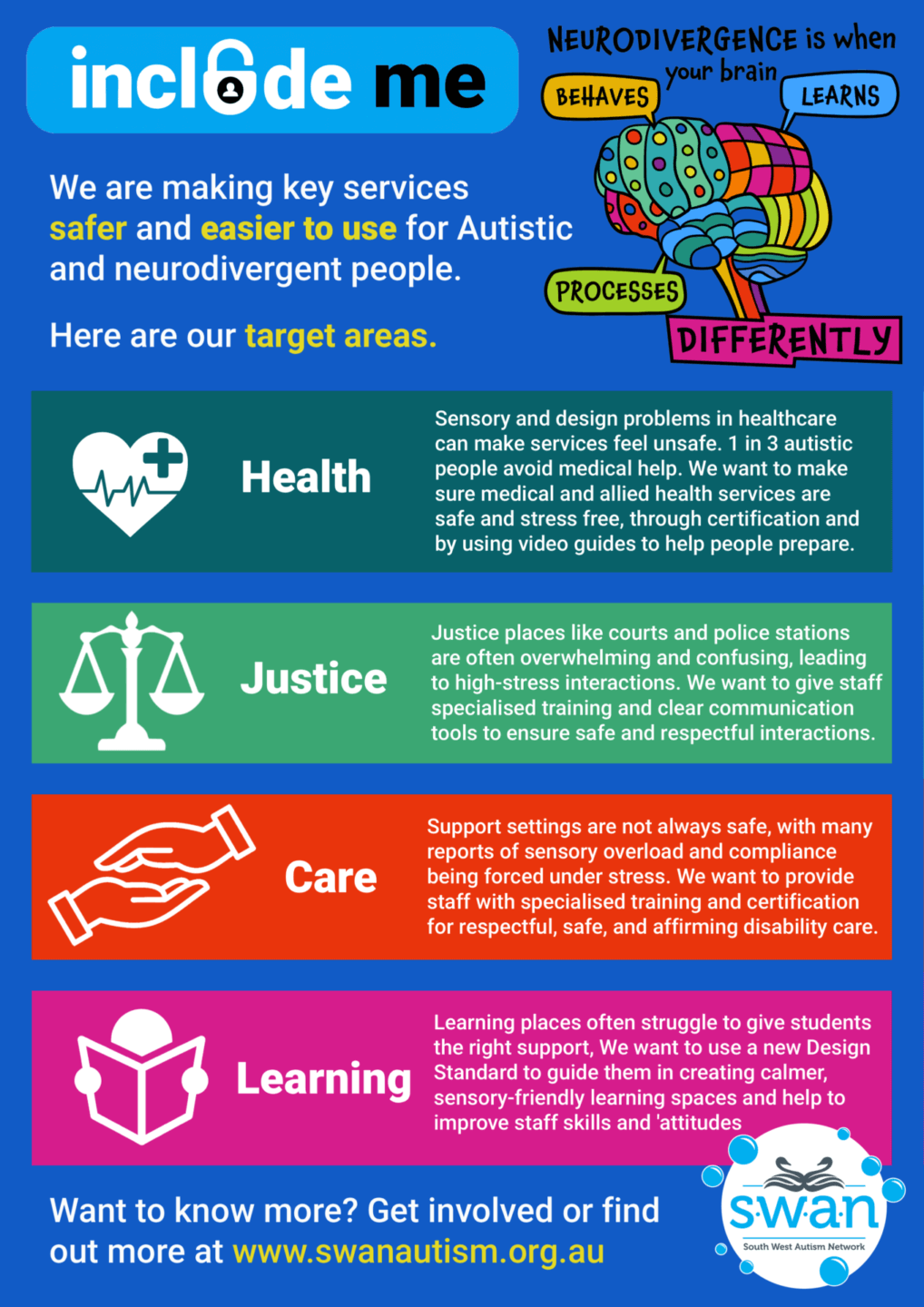
You can download a Word file with the text of the flyer here – Include Me Flyer Word Version.
You can download an easy English version of the flyer here –