Understanding and using body language can be difficult for people with an ASD.
But learning how to use it effectively can help us to communicate more successfully and enjoyably with other people including family, friends and colleagues.
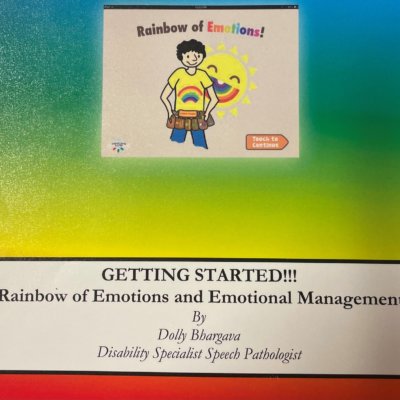
Getting Started! Rainbow of Emotions and Emotional Management
Dolly Bhargava
Details on how to use the "Rainbow of Emotions" app, available at https://www.rainbowofemotions.app/
Getting Started! Using Visual Systems to Promote Communication
Dolly Bhargava
This practical booklet has been written for parents and discusses a range of visual systems that can be used at home to develop your child's communication skills.
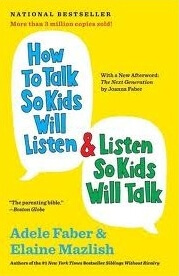
How To Talk So Kids Will Listen & Listen So Kids Will Talk
Adele Faber & Elaine Mazlish
30th Anniversary Edition updated with new insights from the next generation. You can stop fighting with your children!
Here is the bestselling book that will give you the know-how you need to be more effective with your children–and more supportive of yourself. Enthusiastically praised by parents and professionals around the world, the down-to-earth, respectful approach of Adele Faber and Elaine Mazlish makes relationships with children of all ages less stressful and more rewarding. Now, in this thirtieth-anniversary edition, these award-winning experts share their latest insights and suggestions based on feedback they’ve received over the years. Their methods of communication–illustrated with delightful cartoons showing the skills in action–offer innovative ways to solve common problems. You’ll learn how to: Cope with your child’s negative feelings–frustration, disappointment, anger, etc. Express your anger without being hurtful Engage your child’s willing cooperation Set firm limits and still maintain goodwill Use alternatives to punishment Resolve family conflicts peacefully.
How To Talk So Teens Will Listen & Listen So Teens Will Talk
Adele Faber & Elaine Mazlish
The renowned #1 New York Times bestselling authors share their advice and expertise with parents and teens in this accessible, indispensable guide to surviving adolescence.
Adele Faber and Elaine Mazlish transformed parenting with their breakthrough, bestselling books Siblings Without Rivalry and How to Talk So Kids Will Listen & Listen So Kids Will Talk. Now, they return with this essential guide that tackles the tough issues teens and parents face today. Filled with straightforward advice and written in their trademark, down-to-earth style sure to appeal to both parents and teens, this all-new volume offers both innovative, easy-to-implement suggestions and proven techniques to build the foundation for lasting relationships. From curfews and cliques to sex and drugs, it gives parents the tools to help their children safely navigate the often stormy years of adolescence.
It’s Raining Cats and Dogs
Michael Marton
The English language can be extremely confusing and illogical, especially for people with an autism spectrum disorder (ASD) who interpret meaning in a very literal way.
Why should an announcement that cats and dogs are falling from the sky indicate heavy rain? And what have chickens got to do with being a coward? It’s Raining Cats and Dogs is a witty and stylish insight into the mind of someone with an ASD. It beautifully illustrates why people with ASDs have problems understanding common phrases and idioms that others accept unquestioningly as part of everyday speech. The quirky drawings will entertain and inspire those on the spectrum, giving them the confidence to recognise figures of speech, feel less alienated and even use idioms themselves. The drawings will form instantly memorable references for those with ASDs to recall whenever they need to and will be helpful for anyone curious to understand the ASD way of thinking. They will enable people on the spectrum and their friends, families, teachers and colleagues to better understand and communicate with each other.
More Than Words
Fern Sussman
Presents a step-by-step guide for parents of children with autism spectrum disorder in an extensive, practical, and user-friendly format.
Strategies are drawn from current research to help children develop more advanced communication skills, focusing on helping the child reach the following four goals: 1) improved two-way interaction, 2) more mature and conventional ways of communication, 3) better skills in communicating for social purposes and finally, 4) improved understanding of language. Wonderfully illustrated and with chapters divided into four color-coded stages of communication, this book was developed for For Parents of Children with Autism Spectrum Disorder.
Social Thinking at Work
Michelle Garcia Winner and Pamela Crooke
In this groundbreaking book, Michelle Garcia Winner and Pamela Crooke describe the inner workings of the social mind in the workplace and decode the hidden rules of the social world...
by explaining how we think about our own, as well as other people s thoughts and emotions. The process is complex and it requires social multitasking or Social Thinking to successfully navigate the nuances and different mindsets of others, especially people we may perceive as being difficult to work with.
The 1st Comic Book:Helping People with Asperger’s Syndrome
Alis Rowe
"Everyday scenarios for people with Asperger's Syndrome and their Neurotypical loved ones.
A note from SWAN: ‘Asperger’s Syndrome’ is no longer used as a diagnosis and the term “high-functioning” is harmful, as it minimises the varied support needs of autistic people. SWAN does not endorse these terms, but recognises that this resource contains other useful information.
THE 2ND COMIC BOOK
Alis Rowe
"Everyday scenarios for people with Asperger's Syndrome and other autism spectrum disorders and their neurotypical loved ones.
A note from SWAN: ‘Asperger’s Syndrome’ is no longer used as a diagnosis and the term “high-functioning” is harmful, as it minimises the varied support needs of autistic people. SWAN does not endorse these terms, but recognises that this resource contains other useful information.
THE 3RD COMIC BOOK
Alis Rowe
Everyday scenarios for teenagers and young adults with Asperger's Syndrome and related autism spectrum disorders, parents and teachers.
A note from SWAN: ‘Asperger’s Syndrome’ is no longer used as a diagnosis and the term “high-functioning” is harmful, as it minimises the varied support needs of autistic people. SWAN does not endorse these terms, but recognises that this resource contains other useful information.
THE CONVERSATION TRAIN
Joel Shaun
This inventive colour picture book uses the metaphor of a train to teach basic conventions of conversation to children with autism spectrum disorders.
This highly visual approach to conversation is ideally suited to children with ASD’s aged approximately 5-13